Hurricane Season Tree Prep: A Houston Homeowner’s Checklist
Trees, not wind alone, are what take Houston’s power out. After Hurricane Beryl in July 2024, CenterPoint reported that falling trees and limbs were the main cause of outages that peaked above two million customers, and the Texas A&M Forest Service estimated that roughly half of the region’s urban trees were affected. Most of that damage came from trees with problems that were visible months earlier. This checklist is how to find them.
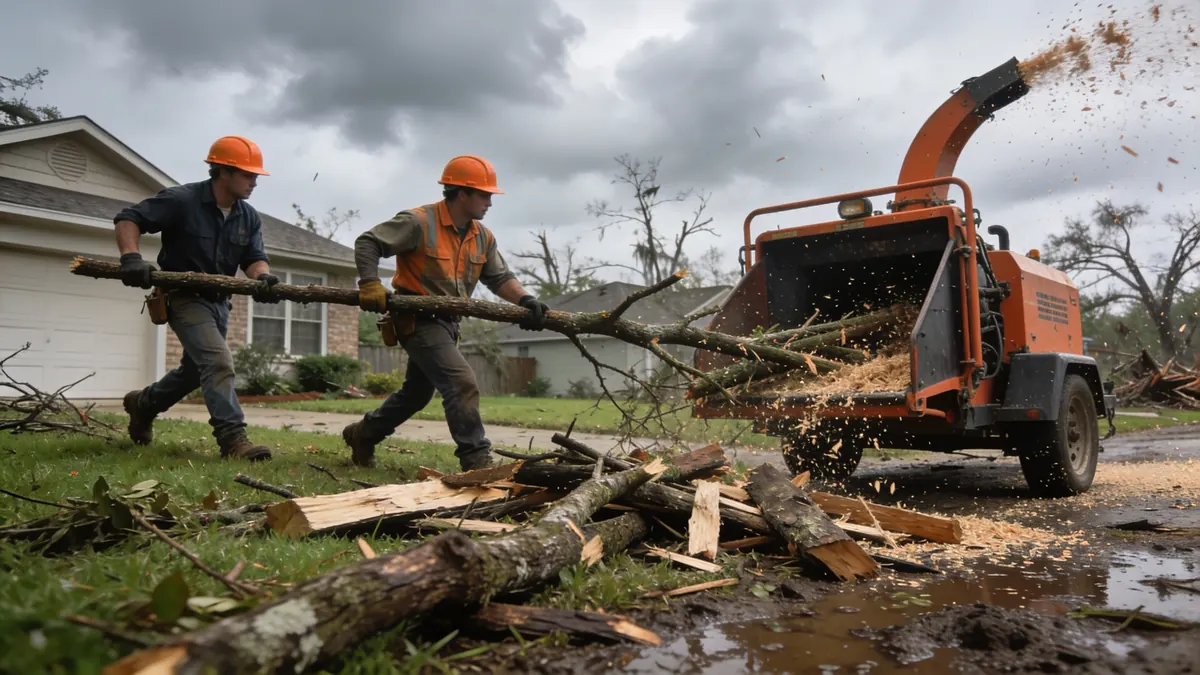
Why Houston trees fail in storms
The Atlantic hurricane season runs from June 1 through November 30, and Houston does not need a hurricane to lose trees: the May 16, 2024 derecho knocked out power to more than 900,000 customers weeks before Beryl arrived. Between the two storms the region hauled away an estimated 4.5 million cubic yards of debris, most of it wood.
Trees fail for predictable reasons. Saturated clay soil loses its grip on root plates, so whole trees tip over. Decay hidden in trunks and major unions lets limbs tear out. Dense, unpruned crowns act as sails. And some species simply were not built for it: water oaks and laurel oaks are short-lived trees that are often hollow by 60 or 70 years old, which is roughly the age of the ones planted when many Houston neighborhoods were built.
Pre-season checklist (do this by late spring)
1. Walk the property and look for warning signs
- Dead limbs larger than two inches, especially over roofs, driveways and sidewalks.
- Cracks, splits or seams in the trunk or where large limbs meet it. Two trunks of similar size joined in a tight “V” (included bark) are a classic failure point.
- Cavities, soft spots, carpenter ants or mushrooms and shelf fungi at the base or on the trunk. Fungus on the outside means decay on the inside.
- A new lean, soil heaving or cracking on one side of the base, or exposed roots that were buried last year.
- Dieback at the top of the crown, thinning foliage, or a canopy that leafed out late this spring.
- Construction in the last few years within the drip line: trenching, grade changes, new driveways. Root damage shows up as storm failure two to five years later.
2. Prune for wind, not for looks
Good storm pruning removes deadwood, reduces over-extended limbs back to strong lateral branches, raises clearance over the roof, and thins crowded areas so wind can move through. It leaves the interior structure alone. Avoid anyone who proposes topping, stripping interior growth (lion-tailing) or taking off more than about a quarter of the live canopy, because all three make trees weaker.
Timing: pines, pecans, elms, magnolias, crape myrtles and most other species can be pruned in spring. Oaks should be done in December and January, or in July and August with wounds painted, to avoid oak wilt. See when to trim oak trees in Houston.
3. Decide on the trees you have been putting off
A dead or dying tree within falling distance of the house is the one item on this list that is not optional. The cost of a scheduled removal in April is a fraction of an emergency removal off a roof in August. If a large tree with structural problems is worth keeping, cabling and bracing can reinforce weak unions, but that is a decision for an on-site assessment.
4. Respect the power lines
CenterPoint Energy trims and removes trees that threaten its primary lines through its forestry program and asks residents not to trim within 10 feet of a line. If limbs are in the main lines along the street or alley, call CenterPoint’s forestry team at 713-207-2222. A tree crew can work around the smaller service drop to your house, but they will plan the job around it.
5. Document everything
Photograph every large tree from two angles with the house in frame, and date the photos. If a tree later damages the house, these pictures support the claim. Keep your tree company’s invoices; they show you maintained the trees, which matters if a neighbor’s property is damaged.
6. Know the plan before the storm
Save the numbers you will need: your insurer’s claims line, CenterPoint outages (800-332-7143), and a tree company that actually answers at night. Clear the yard of loose items that become projectiles. If a storm is forecast, do not start last-minute pruning the day before; half-finished work and stacked brush make things worse.
Our pre-season visits are free. We will tell you which trees need work, which ones do not, and which ones should come down before June. You get it in writing with prices, and you decide.
After the storm
- Treat every downed line as live. Stay back, keep others back, and report it. Do not touch a tree, fence or puddle that is in contact with a line.
- Do not cut anything under tension. A tree resting on a roof, fence or another tree stores enormous energy. This is where chainsaw injuries happen after every Houston storm. Leave it for a crew with rigging.
- Photograph before cleanup. The tree, the damage, the yard. Then call your insurer and get a claim number.
- Prioritize access and safety. Clear the driveway and the path to the door, then the roof, then the rest. Trees that are down in the yard and not touching anything can wait a week; prices are better after the first rush.
- Vet the crew. After Beryl, Houston saw out-of-town crews knocking on doors. Ask for a certificate of insurance showing general liability and workers’ compensation, get the scope in writing, and pay when the job is finished and you have walked the yard. Never pay a large cash deposit.
- Check the survivors. Trees that stayed up can still be damaged: cracked limbs that have not fallen yet, root plates lifted an inch, limbs hung up in the canopy. A post-storm assessment catches the second wave of failures.
Species notes for Houston yards
| Tree | Storm behavior | What to do |
|---|---|---|
| Live oak | Strong wood, broad root system; does well when pruned properly | Deadwood and clearance pruning in winter; avoid heavy canopy reduction |
| Water oak, laurel oak | Short-lived, prone to internal decay and whole-tree failure at maturity | Inspect closely; plan replacement of declining trees before they choose the date |
| Loblolly and slash pine | Snap or uproot in strong gusts, especially isolated trees and those with beetle damage or thin crowns | Remove dead or declining pines near structures; keep groups together |
| Pecan | Brittle; drops large limbs in wind | Reduce long, heavy limbs over roofs; remove deadwood |
| Bradford pear, Arizona ash, Chinese tallow | Weak unions and brittle wood; split and shed readily | Reduce or remove when near targets |
| Magnolia, bald cypress | Generally wind-firm | Routine maintenance |
Frequently asked questions
When should I have my trees trimmed before hurricane season in Houston?
Late winter is ideal for most species, before the June 1 start of the Atlantic season. The exception is oaks: avoid pruning them from February through June because of oak wilt, so schedule oak work for December–January and, if needed, a light pass in July with every cut painted.
Which trees are most likely to fall in a Houston hurricane?
Water oaks and laurel oaks (short-lived, often hollow when mature), tall pines with thin canopies or beetle damage, Bradford pears, and any tree with a lean, a cavity, mushrooms at the base, or roots lifted on one side. Healthy, properly pruned live oaks generally hold up well.
Does trimming really reduce storm damage?
Yes, when it is done right. Removing deadwood, reducing over-extended limbs and thinning dense crowns lets wind pass through instead of pushing the whole tree over. Over-thinning, topping and lion-tailing do the opposite and make failures more likely.
Who removes a tree that falls on power lines?
Stay away from it and assume every line is live. Report it to CenterPoint Energy. The utility or its contractors clear trees on their lines; a tree crew handles the rest once the lines are de-energized or cleared.
Will insurance pay to remove a tree that fell in my yard?
Usually only if it damaged a covered structure, and often with a per-tree or per-storm limit for debris removal. Photograph the tree, the damage and the surrounding area before any cleanup, keep receipts, and ask your adjuster how the debris-removal benefit works.
Want a pre-season tree check?
We walk the property, flag the trees that worry us and the ones that do not, and give you a written plan with prices. Free, no obligation.
Get a Free EstimateCall (832) 568-7355- Houston Landing: Why did so many trees fall after Hurricane Beryl? Here’s what we know
- Wikipedia: Effects of Hurricane Beryl in Texas (outage and debris figures)
- NOAA National Hurricane Center: Atlantic hurricane season
- CenterPoint Energy: Trees and vegetation near power lines
- Texas A&M Forest Service: Prevent the spread of oak wilt
Keep Reading
More Houston tree care guides
Keep reading, or call us and ask.
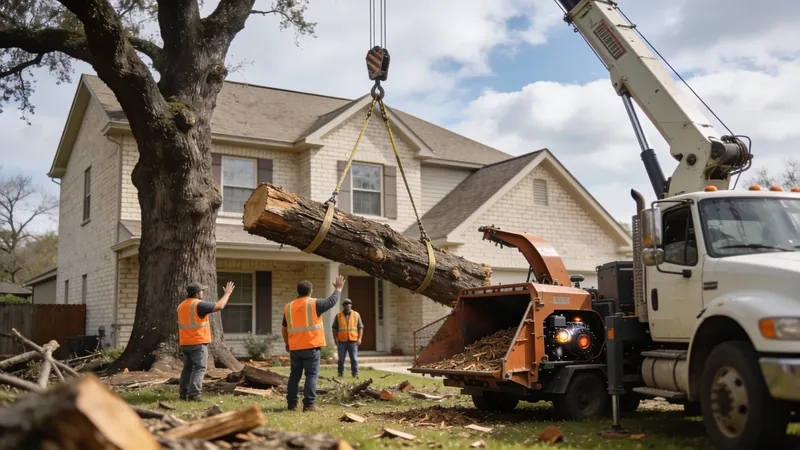
How Much Does Tree Removal Cost in Houston?
Typical 2026 price ranges by tree size, the factors that move the number, and how to compare quotes.
Read the guide →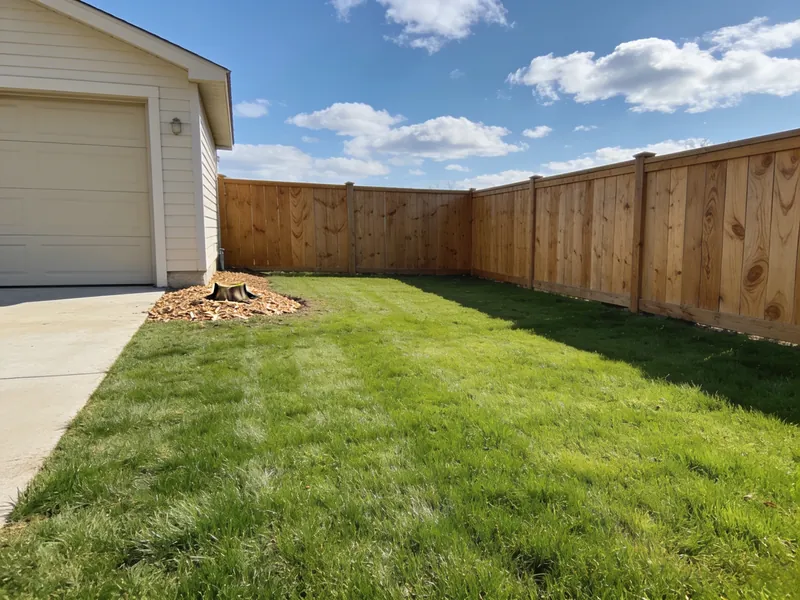
Do You Need a Permit to Remove a Tree in Houston?
City of Houston right-of-way rules, the residential exemption, and the suburbs with their own tree ordinances.
Read the guide →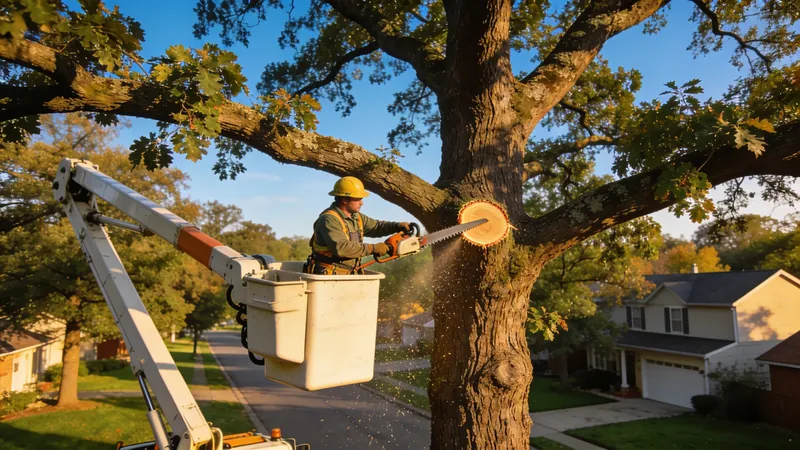
When to Trim Oak Trees in Houston
The February-to-June no-prune window, why wounds get painted, and the right months for structural work.
Read the guide →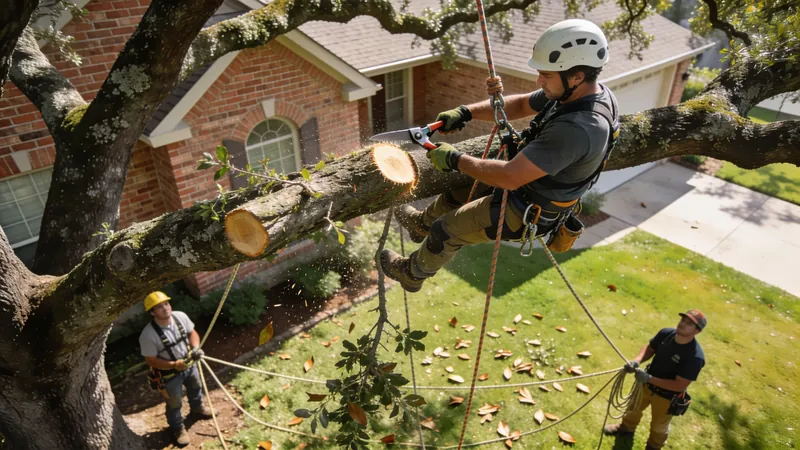
How Much Does Tree Trimming Cost in Houston?
2026 price ranges by tree size, what drives the quote, and how often Houston trees actually need it.
Read the guide →Request a Free Estimate
Tell us about your trees — we usually respond within one business hour.