When to Trim Oak Trees in Houston: Oak Wilt Season Explained
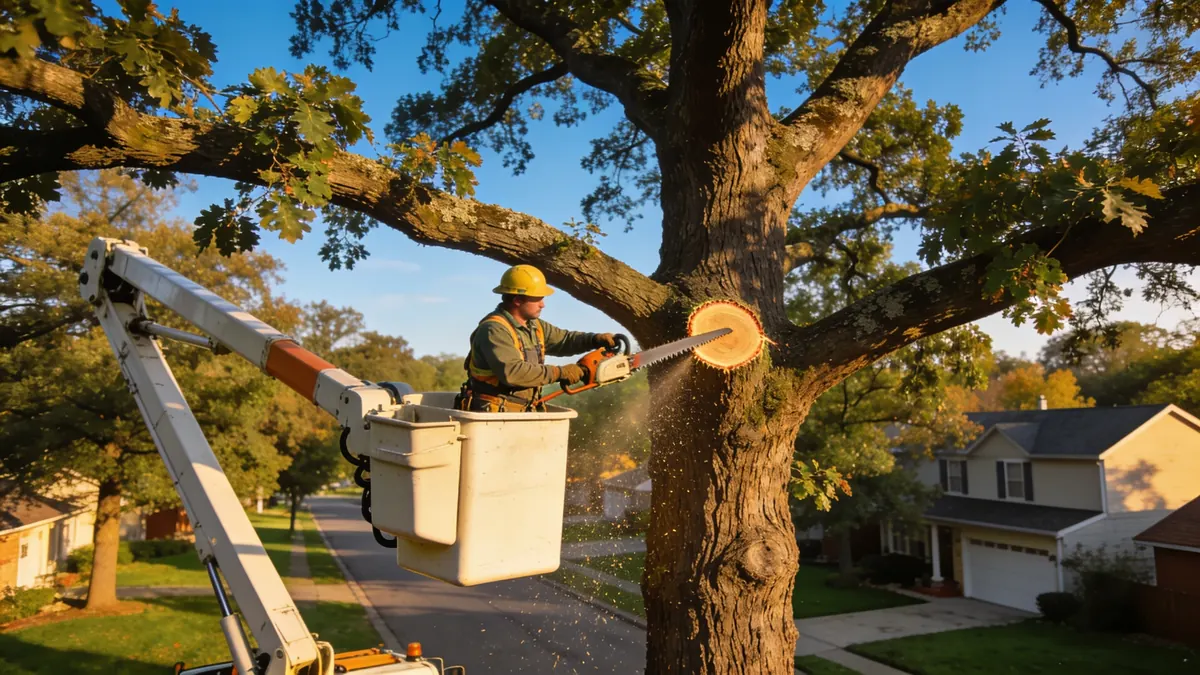
Houston’s live oaks, water oaks and Shumard oaks are the trees most worth protecting on any property, and they are also the trees most often pruned at the wrong time. Oak wilt, a fungal disease spread by sap-feeding beetles, enters through fresh cuts. The timing rules below come from the Texas A&M Forest Service and they are the ones our crews follow.
The short version
- Do not prune oaks from February through June. This is the Texas A&M Forest Service’s statewide guidance, and it is the window when nitidulid (sap-feeding) beetles carry oak wilt spores from infected red oaks to fresh wounds on healthy trees.
- Best months for routine oak pruning in Houston: December and January, then July and August. Cold and heat both suppress beetle activity and spore mats.
- Paint every oak wound immediately, all year. Pruning cuts, storm breaks, mower and trimmer damage, construction scrapes. Any paint will do.
- Hazard pruning does not wait. A cracked limb over the driveway comes down in April if it has to. Clean cut, paint, done.
Why timing matters for Houston oaks
Oak wilt is caused by the fungus Bretziella fagacearum. It spreads two ways. Above ground, beetles feed on fungal mats that form under the bark of red oaks that died the previous season, pick up spores, and fly to fresh wounds on other oaks. The beetles and the mats are most active in late winter and spring, which is why February through June is the high-risk window. Below ground, live oaks and red oaks graft their roots together, so once one tree in a row is infected the fungus can move down the street without any beetle at all.
Houston sits on the eastern edge of the Texas oak wilt range, and the city runs its own oak wilt program. The disease is less common here than in Austin or the Hill Country, which is exactly why prevention is worth the small effort: our live oak canopy in River Oaks, West University, Memorial and The Heights is largely uninfected and we would like to keep it that way.
Which Houston oaks are at risk
| Group | Common Houston species | What oak wilt does |
|---|---|---|
| Red oaks | Shumard oak, Texas red oak, water oak, willow oak, Nuttall oak | Most susceptible. Trees can die within weeks of infection and they produce the spore mats that start new outbreaks. |
| Live oaks | Southern live oak | Highly susceptible and connected by root grafts, so infection spreads tree to tree. Leaves show yellow or brown veins (veinal necrosis) before the canopy thins. Death may take months to years. |
| White oaks | Post oak, bur oak, white oak, swamp chestnut oak | Much more resistant. They rarely die from oak wilt and almost never spread it, but post oaks are sensitive to root disturbance from construction. |
A Houston oak pruning calendar
| Months | Oak pruning | What we do |
|---|---|---|
| December – January | Best window | Structural pruning, crown cleaning, roof and street clearance, deadwood removal. Trees are dormant and beetles are inactive. |
| February – June | Avoid | Hazard work only. Every cut painted at once. Hurricane-prep work on oaks is planned for the windows on either side. |
| July – August | Good window | Clearance pruning and deadwood. Heat suppresses beetle activity. Crews keep live-canopy removal modest in summer heat. |
| September – November | Acceptable with care | Light pruning and post-storm cleanup. Paint wounds; risk rises again as temperatures cool. |
Hurricane season conflict: the Atlantic season runs June 1 to November 30, and the ideal pre-storm pruning time (spring) overlaps the oak wilt window. Our answer is to do structural work on oaks in December and January, then a clearance and deadwood pass in July if needed. Non-oak species such as pines, pecans, elms and crape myrtles can be pruned in spring without the oak wilt concern. See our hurricane season tree prep guide.
How oaks should be pruned (any month)
- Collar cuts, not flush cuts. Cutting just outside the branch collar lets the tree seal the wound. Flush cuts and stubs both invite decay.
- No topping, no lion-tailing. Removing the interior branches and leaving tufts at the ends makes limbs more likely to fail in wind, not less.
- Less than a quarter of the live canopy per season. Mature live oaks in particular respond badly to heavy pruning.
- Sanitized tools between trees. A quick wipe with disinfectant between oaks is cheap insurance against spreading pathogens on saw chains and pole pruners.
- Paint oak wounds immediately. Within minutes, not at the end of the day.
Signs your oak may already have oak wilt
On live oaks, look for leaves with yellow or brown veins while the tissue between veins stays green, followed by thinning from the top of the crown. On red oaks, look for leaves that suddenly bronze or wilt from the edges in late spring and summer and drop while still partly green, with the whole tree dying within weeks. Neighborhood patterns are a clue too: several live oaks in a row declining in sequence suggests root-graft spread. If you see these signs, do not prune. Call for a diagnosis; the Texas A&M Forest Service and certified arborists can confirm the disease, and treatments such as fungicide injection of high-value live oaks and trenching to break root grafts are most effective early.
Frequently asked questions
What months should I not trim oak trees in Texas?
The Texas A&M Forest Service advises against pruning or otherwise wounding oaks from February through June, when the beetles that carry oak wilt spores are most active and fungal mats are most common. Houston’s mild winters mean the risk does not disappear outside that window, which is why wounds should be painted year-round.
Can I trim my oak tree in the summer in Houston?
Yes. July and August are among the safer months, along with December and January. The Forest Service describes the hottest and coldest parts of the year as the safest times to prune oaks. Paint every cut immediately, and avoid removing more than about a quarter of the live canopy in one season.
Do live oaks get oak wilt?
Yes. Live oaks are highly susceptible and, because their roots graft together, the disease can move from tree to tree underground through an entire neighborhood. Red oaks such as Shumard, Texas red oak and water oak die fastest and produce the spore mats that start new infections.
Should pruning cuts on oaks really be painted?
Yes, immediately, at any time of year. Any paint works; the goal is to cover the fresh wound so it does not attract sap-feeding beetles. This is the one case where arborists recommend wound paint. Other species generally do not need it.
My oak was damaged in a storm during oak wilt season. What now?
Safety first: hazardous limbs can be removed in any month. Make clean cuts, paint them right away, and keep the pruned wood on site covered or chipped rather than hauled to an area with healthy oaks. Call for an assessment if the tree is large or near a structure.
Have an oak that needs attention?
We schedule oak work for the safe windows, paint every cut, and sanitize tools between trees. Free written estimates across greater Houston.
Get a Free EstimateCall (832) 568-7355- Texas A&M Forest Service: Prevent the spread of oak wilt this spring in Texas
- Texas Oak Wilt Partnership (Texas A&M Forest Service): identification, prevention and treatment
- International Society of Arboriculture: Pruning young and mature trees
- Houston Permitting Center: Tree removal / tree trimming permit
Keep Reading
More Houston tree care guides
Keep reading, or call us and ask.
How Much Does Tree Removal Cost in Houston?
Typical 2026 price ranges by tree size, the factors that move the number, and how to compare quotes.
Read the guide →
Do You Need a Permit to Remove a Tree in Houston?
City of Houston right-of-way rules, the residential exemption, and the suburbs with their own tree ordinances.
Read the guide →
Hurricane Season Tree Prep for Houston
Which trees fail in wind, what to prune before June, power line rules, insurance photos and post-storm safety.
Read the guide →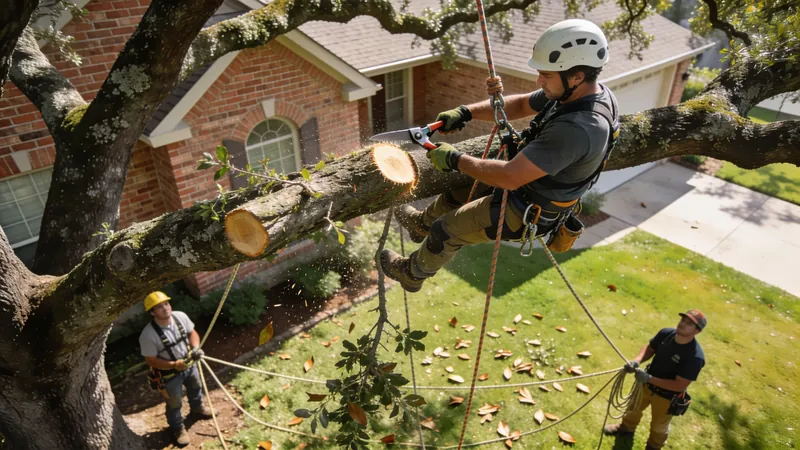
How Much Does Tree Trimming Cost in Houston?
2026 price ranges by tree size, what drives the quote, and how often Houston trees actually need it.
Read the guide →Request a Free Estimate
Tell us about your trees — we usually respond within one business hour.